Devasted that Luljeta Nuzi has died after a long fight with cancer. An incredible, dynamic, fierce woman whose optimism and passion for equality for all, in education, as women, as members of refugee and global majority communities will remain an inspiration for those who met her. I first met Luljeta in 2009 when she came […]
Changes to GCSEs
For GCSE subjects taught in mainstream schools the new specifications are already being taught and children will be taking the new exams in the Summer term 2018 (or in the case of English and maths already took the reformed exams this year).
For ‘community’ languages ie. many of the languages taught in supplementary schools, the new specifications were issued for teaching from September 2017 by AQA and are still in draft for Pearson Edexcel, due to be taught from September 2018. Exams will be available to take in 2019 or 2020 depending on language.
Take a look at the draft specification for your language on the exam board website.
Have you had training on the new specification? Are you sure that your pupils will be able to take the current/old specification exam in 2018? Have you spoken to the mainstream schools where your pupils sit their language exams? Let us know and we will get more information for you and, if necessary, co-ordinate a campaign to ensure that pupils are able to take ‘community’ language exams in 2018 and 2019.
These changes will apply to all awarding organisations’ specifications:
- The new 9-1 grading system will replace A*-G, and there will no longer be any controlled assessment. All papers will be set and marked by the awarding organisation.
- Papers will be tiered, with 25% assessment weightings per skill (listening, speaking, reading, writing).
- Compulsory topics will be linked to identity and culture; local, national, international and global areas of interest; and current and future study and employment.
- Papers will include:
- short translations from and into the target language
- some target-language questions in the reading and listening papers
- authentic stimuli in the reading paper, including literary texts.
For AQA the following languages will be available for GCSE examination from 2019:
Bengali, Chinese (Mandarin), Italian, Modern Hebrew, Panjabi, Polish, Urdu
For Pearson Edexcel the following languages will be available for GCSE examination in 2019
Arabic, Greek, Italian, Japanese, Portuguese, Russian, Urdu
And the remaining five from 2020:
Gujarati, Turkish, Biblical Hebrew and Persian
For A levels check with the examination boards directly.
If you teach a language offered by AQA then you should contact the person you generally speak to, these languages have been with AQA for several years. If you used to speak to someone at OCR, contact Alistair in the first instance for all languages with Pearson because he is very helpful – see below.
Top Quality Mark Award for Bradford Supplementary Schools
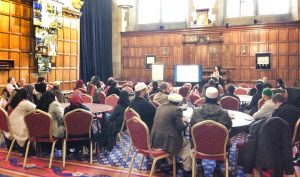
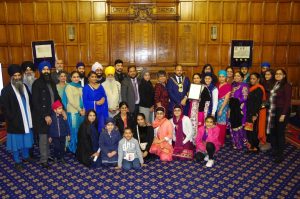
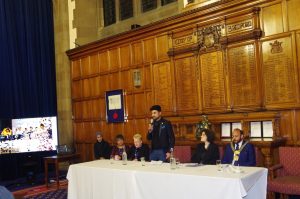
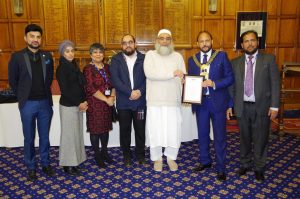
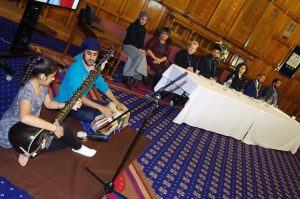
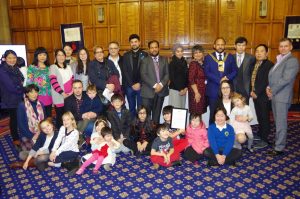
A ceremony to recognise supplementary schools who have achieved the national Quality Mark for Supplementary Education was held at City Hall in presence of the Lord Mayor of Bradford and Judith Kirk, Deputy Director of Children’s Services, NRCSE CEO, Pascale Vassie, and other respected councillors and guests from Bradford’s diverse communities including representatives from supplementary schools as well children and young people who inspired the audience with their cultural performances.
Bradford Council, in partnership with the National Resource Centre for Supplementary Education (NRCSE) has recently piloted the nationally recognised Quality Mark launching their commitment to raise the quality of supplementary education in the city at a packed event in February 2016. In July 2017, over 250 people attended a conference at the University of Bradford on the Emerging role of supplementary schools: Practical solutions for challenging times. From June to September 2017, the Bradford Polish School, Bradford Chinese School and Gurdwara Singh Sabha Khalsa Punjabi School were visited by mentors and prepared evidence for a Quality Mark recognition meeting.
Javed Bashir, School Development Officer within Bradford Council’s Diversity & Cohesion Service, said: “We held a Quality Recognition Meeting with the schools in September where portfolios of evidence of their work were presented to education experts. The Bradford Polish School, Bradford Chinese School and Gurdwara Singh Sabha have all achieved the National Quality Mark and the Madrasah Madania Tahfeezul Quran (MMTQ) gained the Bradford Bronze Award, which means they have completed the basic requirements for Safeguarding and now they will go on to complete the other elements which will see them also receive the National Quality Mark in the future. It is fantastic that we can welcome all those involved to an Awards Ceremony at City Hall.
“Coun Imran Khan, Bradford Council’s Executive Member for Education, Employment and Skills, said: “This is great news for these schools and our congratulations go to all those who have worked very hard to bring about this positive achievement.”
“We expect every Supplementary School in the district to achieve this Quality Mark, and the Council’s Diversity & Cohesion Service, which works with Supplementary Schools, is aiming for this to happen.”
For more information on how to get involved please contact javed.bashir@bradford.gov.uk or call 01274-439385.


New quality recognition scheme builds on government regulation
Stop press: New quality recognition scheme encourages development of best practice in out-of-school provision and builds on existing government regulation.
The NRCSE Quality Mark builds on Section 11 of the Children’s Act 2004 and addresses eight standards in educational provision:
- Create an effective learning environment
- Teach effectively
- Record progress and achievement
- Choose the right resources
- Plan and develop your organisation
- Select and support staff and volunteers
- Make sure that children are safe
- Manage finances
The NRCSE provides free self-evaluation resources and online guidance on minimum safeguarding standards on our website staging.supplementaryeducation.org.uk Downloadable templates and discounted training can be accessed by subscribing to NRCSE. Contact details for agencies providing support in the school’s local authority area are also provided. The NSPCC has recently updated their toolkit of safeguarding standards and guidance in line with Section 11 guidelines so that is a good place to start if your local safeguarding children board isn’t responding quickly. Section 11 of the Children Act 2004 places duties on a range of agencies and individuals to ensure their functions, and any services that they contract out to others, are discharged having regard to the need to safeguard and promote the welfare of children. You can contact your local safeguarding children board to obtain details of the support provided in your area to meet these standards.
In order to apply for an NRCSE Quality Mark a supplementary school must:
- Meet the stated Section 11/safeguarding requirements for your local authority, and
- provide up-to-date information on the services it provides, and
- have received a visit from an appropriate person*.
*nationally qualified member of teaching staff, or Children’s Services, or registered NRCSE quality assurance mentor
Following a Recognition Meeting the school will receive a detailed report highlighting good practice and containing recommendations for development. Successful recognition will entitle the school to carry the NRCSE Quality Mark and the quality assurance report will be publicly available on the NRCSE Online Directory of Supplementary Schools (unless the supplementary school has provided a written request not to be publicly listed).
Start working towards an NRCSE Quality Mark today!
To enter your school for an NRCSE Quality Mark you must be able to demonstrate that you meet local safeguarding standards (see below) for Voluntary & Community Sector (VCS) organisations working with children and young people as detailed in: HM Gov. document ‘Working together to safeguard children’ 2015, chapter 2 and para 4 Section 11, Children Act 2004
- Culture of listening to and consulting with children
- Effective recruitment, selection and contractual procedures including safeguarding checks
- Staff/volunteer supervision, support, training, induction, review, competence
- Staff aware of safeguarding policies and procedures including what to do if concerned about a child
- Procedures for dealing with allegations against staff/volunteers
- Requirement to refer to DBS and local authority designated officer or team dealing with allegations against those who work with children (formerly known as LADO)
- Supportive environment for staff/volunteers that encourages sharing of safeguarding concerns and provides clear
- whistleblowing procedures
- Clear lines of accountability for safeguarding arrangements
- Senior board level/management commitment to safeguarding
- Designated professional lead for safeguarding
- Arrangements for information sharing with other professionals and LSCB
You can demonstrate this via written confirmation from your local authority, or confirmation from Ofsted that you meet the requirements of the childcare register, or by completing the NRCSE safeguarding quiz and uploading your management file online.
For more details about the NRCSE Quality Mark visit our website staging.supplementaryeducation.org.uk
Download a printable flyer about the NRCSE quality recognition scheme
Latest stats for ‘lesser-taught’ languages
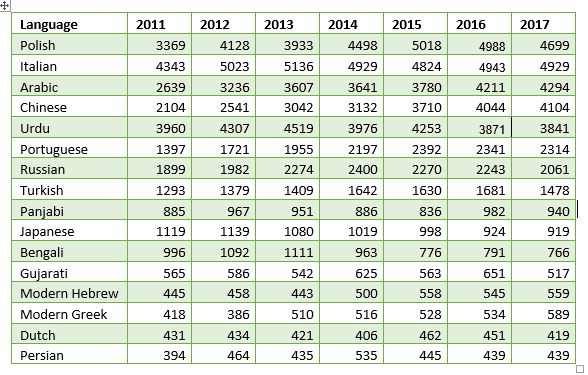
The wonderful Teresa Tinsley, who writes Language Trends each year and is a champion for language learning, has prepared this chart for us.
Showing entries for GCSE and A level examinations in all 16 languages that currently have GB exams available, the chart also shows trends in the numbers entering those exams since 2011.
You will remember that we all had to campaign very hard in 2016 to retain the range of languages with an GB exam available. Working together we were successful in convincing Pearson Edexcel to take over exams that were due to be shelved.
But the hard work has only just begun.
The new exams are being developed now, they will be available for teaching next year and for examination the year after. We need to ensure that teachers are properly trained to teach the new syllabus, we need to ensure children can be presented for those exams in their mainstream schools or join together in language communities to offer centralised examination centres in the way the Tamil community has done. And you need to convince your pupils and their parents to continue their language education so that they can take the exams.
Here are the GCSE entries, you can check A levels on Teresa’s blog