Devasted that Luljeta Nuzi has died after a long fight with cancer. An incredible, dynamic, fierce woman whose optimism and passion for equality for all, in education, as women, as members of refugee and global majority communities will remain an inspiration for those who met her. I first met Luljeta in 2009 when she came […]
Sharing Creative Ideas Session
This sharing session is for the teachers in the Creative Teaching and Learning Project but don’t worry, if you are not part of the project there is plenty of information you can access on our Creative Project webpages and we are planning to run a second cohort in the next academic year so read up on what your colleagues have been doing this year and stay in touch.
Dr Mon Partovi
mon@nrcse.org.uk
Preparation for Higher Education in Teacher Training Programme (PGCE Course) especially for refugees and asylum seekers
This message was sent from Reconnect
Dear Colleagues,
I am pleased to inform you that Reconnect in partnership with Computer Aid International and working with UCL Institute of Education is currently providing a unique preparatory programme to the first group of refugees and asylum seekers who are keen to enrol into higher education or to participate in a Teacher Training (PGCE) programme at UCL Institute of Education – a world-leading centre for research and teaching in education and social science. The programme is being run by a team of highly experienced academics and practitioners.
The Module includes an introduction to
1. Critical Reading, Academic Writing and Academic Presentation in Higher Education
2. Active, interactive and interpretive modes of learning: collaborative discussion, writing and
presentation making use of:
- Virtual learning environments – Moodle and associated applications
- Computer labs for developing familiarity with PowerPoint (or similar applications)
- Electronic journal articles and books via online resources accessible through the UCL library
3. Intercultural learning and understanding, and the British education system
The programme covers fees and cost of travel and makes a contribution to learning materials.
The programme is being provided, over 10 weeks, during the autumn, spring and summer terms 2018/19. Enrolment is for one term only; each session will be 3 hours; there will be 3 cohorts, each of 20 students.
The first group of Asylum Seekers and Refugees is currently attending the first Module (autumn term 2018) and are due to complete the course on 5 December 2018.
There will be two more opportunities to attend the Module in either of the following two terms:
– 2019 Spring Term, Thursdays, 1pm to 4pm, from 10 January to 21 March
or
– 2019 Summer Term, Wednesdays, 6pm to 9pm, from 24 April to 26 June
Those who are interested in joining the programme must download Information Sheet and Application Form.
Please circulate the information to those who could benefit from this programme.
For further information, please contact theodros@reconnectonline.org.uk or call 0207 697 4065.
With thanks
Theodros Abraham
Director
New funds given to H&F supplementary schools!
H&F Supplementary Schools Network Meeting leads to funds for seven supplementary school
Following on from the Networking Meeting, 9 funding applications were submitted to YHFF. On 14th Nov 2018 a Grants Panel, facilitated by YHFF, was convened to review the 9 applications. Of the 9, 7 schools were awarded the Grants funding with 2 applications needing further development.
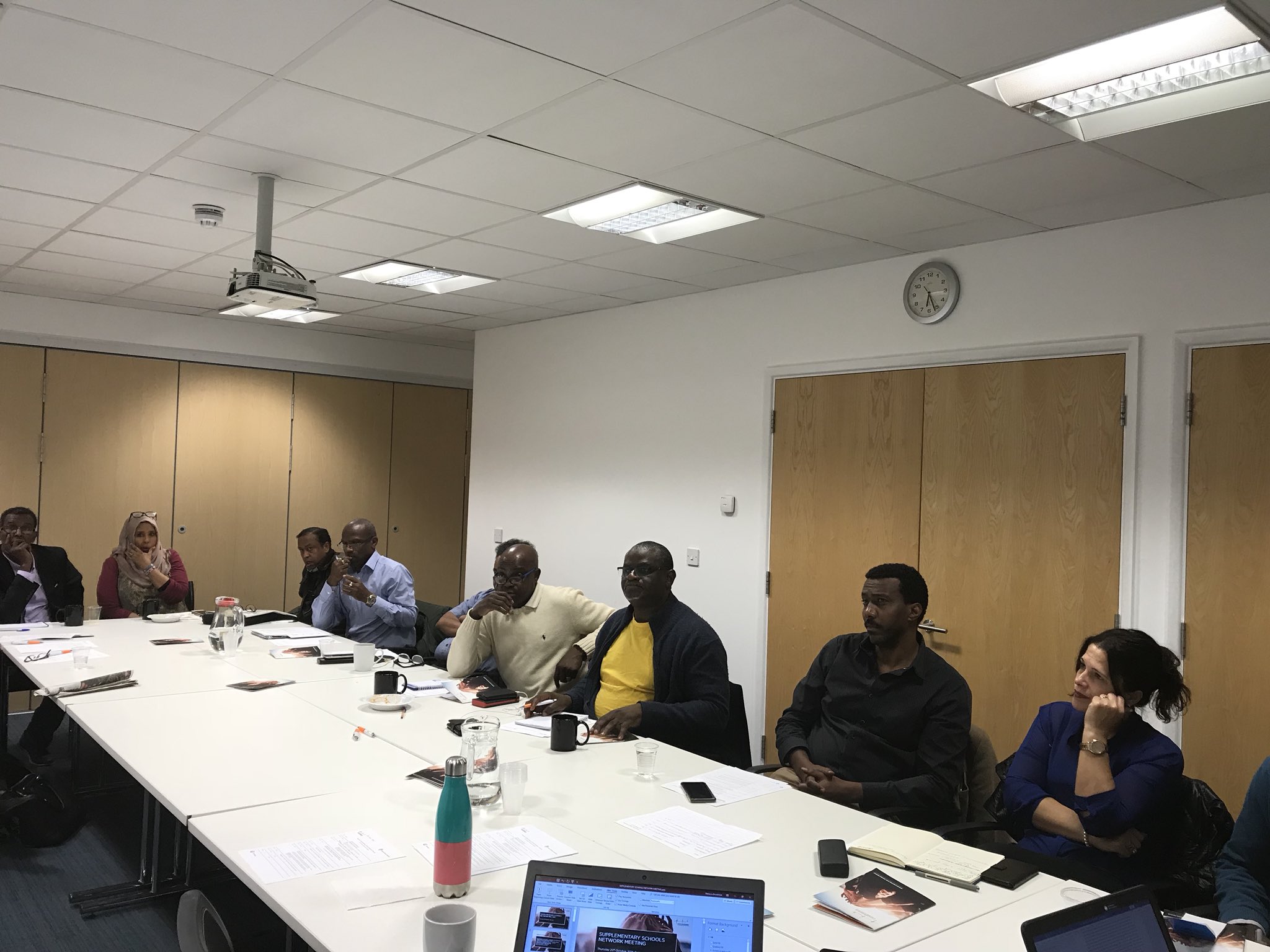
The second H&F Supplementary Schools Forum on 25th October, hosted by YHFF in collaboration with NRCSE was a well-attended event with up to 11 supplementary schools being represented by senior staff and tutors.
This was a practical evening which took attendees through the process of completing the YHFF funding application for John Lyon’s funding by exploring what information funders are looking for and how do schools monitor the progress of their students.
There was an interactive presentation from NRCSE looking at the types of evidence schools can provide to demonstrate the strength of their provision when working towards achieving the NRCSE Quality Mark.
Participants were also invited to share their experiences of supplementary education and to discuss what future agenda items or guest speakers would be beneficial to the forum. NRCSE have been asked to deliver a Refresher Training on the topics of Safeguarding, Classroom Behaviour Management and working with children with Special Educational Needs and Disability (SEND).
The next meeting is scheduled for January 2019
For further information and to sign up to the forum contact claud@nrcse.org.uk or call 020 7697 4053
April 15-17 Language rules? Languages, standards and linguistic inequality: multilingualism and variation in education, law and citizenship
Save the Date! (Registration from late January 2019)
Language rules? Languages, standards and linguistic inequality: multilingualism and variation in education, law and citizenship
University of Nottingham, April 15-17, 2019
As part of the AHRC-funded project Multilingualism – Empowering Individuals, Transforming Societies (www.meits.org), Language Rules will bring together practitioners – teachers, speech therapists, examiners, dictionary-makers, lobbyists, policy-makers, and others – with academics to examine how assumptions about correct, acceptable or standard languages impact on everyday life in a multilingual world, and how to tackle potential inequalities.
The conference includes a public Leverhulme Lecture by the Leverhulme Trust Visiting Professor at the University of Nottingham, Professor Doug Kibbee:
• Professor Doug Kibbee – Language, Law and Linguistic Inequality in the USA and Europe
Other confirmed keynote speakers:
• Brian North – Language standard, plurilingual repertoires and the Common European Framework of Reference for Languages (CEFR)
• Prof. Bettina Migge (University College Dublin) – (In)visible Languages and Equality, Diversity and Inclusion
• Prof. Astrid Adler (Institut Deutsche Sprache, Mannheim) – European Language Policies
Confirmed panels include:
• Language standard, standard languages, and speech therapy
• Multilingualism, language standards, and the law
• Language examinations and language standards
• Learning from history – understanding the multilingual past to inform the present
• Languages and Equality, Diversity and Inclusion
• Translating Research Into Policy
The Nottingham launch of We are Multilingual will also take place as part of the event.
For queries, please contact Nicola.mclelland@nottingham.ac.uk
Prof. Nicola McLelland
Professor of German and History of Linguistics
Head of School
School of Cultures, Languages and Area Studies
University of Nottingham
Room B6a, Trent Building
University Park
Nottingham, NG7 2RD
+44 (0) 115 95 15822 | nicola.mclelland@nottingham.ac.uk .ac.uk
http://www.nottingham.ac.uk/clas/people/nicola.mclelland
Follow us
Facebook.com/TheUniofNottingham
Twitter.com/UniofNottingham
Youtube.com/nottmuniversity
Instagram.com/uniofnottingham
Linkedin.com/company/university-of-Nottingham
Co-Investigator and Deputy Project-Leader, on the AHRC-funded MEITS project (2016-2020): www.meits.org
Latest books:
The History of Language Learning and Teaching, ed., with Richard Smith, (3. Vols. Legenda, for the MHRA, 2018)