Devasted that Luljeta Nuzi has died after a long fight with cancer. An incredible, dynamic, fierce woman whose optimism and passion for equality for all, in education, as women, as members of refugee and global majority communities will remain an inspiration for those who met her. I first met Luljeta in 2009 when she came […]

Can’t get to the museum? They will come to you!
Supplementary schools programme, at your school sessions – January-March 2018
The Museum of London is currently taking bookings for free, at your school workshops which can be delivered in supplementary schools across London between January-March 2018.
Here is a list of sessions that we can offer:
1. Excavating London: archaeology uncovered!
Using a range of handling objects from the Roman times to present day, students will take on the role of an archaeologist and work in groups to uncover the hidden histories of London’s past. This session will involve role play, object handling and art activities.
2. Limehouse to West End: Chinatown
This interactive, hands-on session, inspired by the museum’s collections, will encourage students to explore the changing nature of Chinatown through the years. They will learn about the Chinese sailors that settled in London’s first Chinatown, their lives in the East End and explore the reasons why it moved after the Second World War. Students will also be invited to bring in objects from home that reflects a part of their identity as Chinese-Londoners today.
3. Our London, Our Stories
London is an ever-changing city, influenced by the many groups of people that have called it home from prehistoric times to present day. This interactive session will teach students the skills of a museum curator and then create their own visual display based on objects from home that celebrates their heritage and identities as 21st Century Londoners.
4. London’s Burning: stories of the Great Fire!
To mark the 350th Anniversary of the Great Fire we will be running a special session inspired by this pivotal event which took place in 1666.
Explore what life was like in London on the eve of the fire; discover the dramatic events that took place as the fire blazed through a quarter of the city and recreate how Londoners tried to put out the flames. This drama based session will use objects and props from our collection for students to get into character and create their own stories about the event that changed the face of London forever!
5. Anglo-Saxons and beyond! German heritage in London
London is an ever-changing city, influenced by the many groups of people that have called it home from prehistoric times to present day. This hands-on session uses images and handling objects from our collection to explore German heritage in London from the Anglo-Saxon period to the 1600s. Students will also be invited to bring in objects from home which reflects their identity today.
6. Science of the Docks (STEM science session)
Join scientist Chris Bailey to learn more about the science of the Docklands and how they brought in, stored goods and sent produce from all around the world across Britain.
7. Power to the People (STEM science session)
Modern lives are dependent on energy, but where does it come from? Join scientist Chris Bailey for an interactive workshop exploring wind and solar energy and how this can help create a more sustainable city.
If you would like to book a free at your school session or receive more information about the programme, please contact Emma Taylor, Supplementary Schools Programme Manager on 020 7814 5579 or email etaylor@museumoflondon.org.uk
Open access to our 3-day Good Management course
The purpose of this popular three-day Good Management course is to help community providers of supplementary education meet the minimum requirements for safe out-of-school provision.
It remains our firm mission to get local authorities to book the 3-day Good Management for Supplementary Schools course directly and offer it to supplementary schools under their remit. We have had an excellent response from Brent, Harrow, Ealing, Hammersmith & Fulham, Kensington & Chelsea, Sheffield and Suffolk since launching the 3-day course and we’re keen to deliver in other authorities. Please take a look at the course content and get in touch to discuss further.
It is also, however, our mission to support community-led supplementary schools where the authorities are not able to support you. For this reason in January 2018, we are offering our popular 3-day Good Management course directly to individual learners. Whether you are planning to open a supplementary school, you have just joined the management committee of your child’s supplementary school or you have been running out of school activities for many years and you need to check that you are doing everything in line with current policy and good practice – our 3-day Good Management course will help you.

You can meet all your New Year’s resolutions at once by attending our course in January!
Over the three days we shall prepare a three booklets that you can use with parents, teachers and volunteers, and the management committee. Together the three booklets will guide you to put together a Management File for your supplementary school.
The Good Management Pack consists of
- A Welcome Pack for Parents
- Staff and Volunteer Handbook
- Management Committee Guide
To complete the minimum requirements for safe out-of-school provision you must have all of the policies and procedures detailed in the Good Management Pack. Each day we shall complete one of the three focused booklets: Day 1 -Welcome Pack for Parents; Day 2 – Staff and Volunteer Handbook, Day 3 – Management Committee Guide.
The fee for the full course is £450 or £150 per day. If you book all three days together you can send two people for the price of one, an excellent opportunity to train up a prospective trustee or a staff member.
If you subscribe to NRCSE you access discounted prices on all our products. For this course the full price is £225 or £75 per day. You are also eligible for the same two for one discount as above.
Just go to the training section in our online shop to book your place(s). To get the maximum benefit from this course your school should send at least one person to all three sessions. Even better, if you book all three days together you can send two people each day for the same price!
Honour for NRCSE Executive Director and recognition of supplementary education
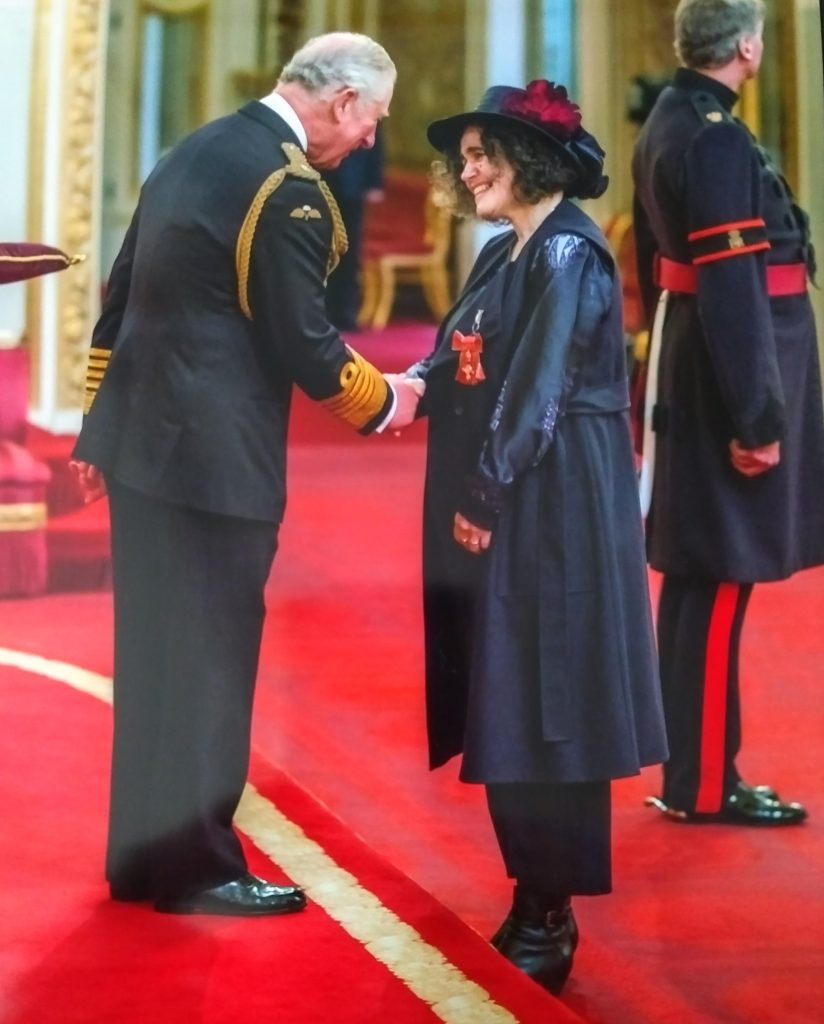
On 16 November 2017, HRH Prince of Wales presented NRCSE Executive Director, Pascale Vassie, with the OBE in recognition of services to education.
This is tremendous recognition not only for her, but for all the people who volunteer their time at weekends and after school to enhance children’s academic achievements and understanding of language, faith, arts and culture.
We are proud that the work that has been done by the NRCSE, under Pascale’s leadership, to promote the enormous value of community-led supplementary education to children, to communities and to the country has been recognised by government.
Congratulations to Pascale, well deserved.
Changes to GCSEs
For GCSE subjects taught in mainstream schools the new specifications are already being taught and children will be taking the new exams in the Summer term 2018 (or in the case of English and maths already took the reformed exams this year).
For ‘community’ languages ie. many of the languages taught in supplementary schools, the new specifications were issued for teaching from September 2017 by AQA and are still in draft for Pearson Edexcel, due to be taught from September 2018. Exams will be available to take in 2019 or 2020 depending on language.
Take a look at the draft specification for your language on the exam board website.
Have you had training on the new specification? Are you sure that your pupils will be able to take the current/old specification exam in 2018? Have you spoken to the mainstream schools where your pupils sit their language exams? Let us know and we will get more information for you and, if necessary, co-ordinate a campaign to ensure that pupils are able to take ‘community’ language exams in 2018 and 2019.
These changes will apply to all awarding organisations’ specifications:
- The new 9-1 grading system will replace A*-G, and there will no longer be any controlled assessment. All papers will be set and marked by the awarding organisation.
- Papers will be tiered, with 25% assessment weightings per skill (listening, speaking, reading, writing).
- Compulsory topics will be linked to identity and culture; local, national, international and global areas of interest; and current and future study and employment.
- Papers will include:
- short translations from and into the target language
- some target-language questions in the reading and listening papers
- authentic stimuli in the reading paper, including literary texts.
For AQA the following languages will be available for GCSE examination from 2019:
Bengali, Chinese (Mandarin), Italian, Modern Hebrew, Panjabi, Polish, Urdu
For Pearson Edexcel the following languages will be available for GCSE examination in 2019
Arabic, Greek, Italian, Japanese, Portuguese, Russian, Urdu
And the remaining five from 2020:
Gujarati, Turkish, Biblical Hebrew and Persian
For A levels check with the examination boards directly.
If you teach a language offered by AQA then you should contact the person you generally speak to, these languages have been with AQA for several years. If you used to speak to someone at OCR, contact Alistair in the first instance for all languages with Pearson because he is very helpful – see below.