Devasted that Luljeta Nuzi has died after a long fight with cancer. An incredible, dynamic, fierce woman whose optimism and passion for equality for all, in education, as women, as members of refugee and global majority communities will remain an inspiration for those who met her. I first met Luljeta in 2009 when she came […]

Language GCSE exam entry 2018
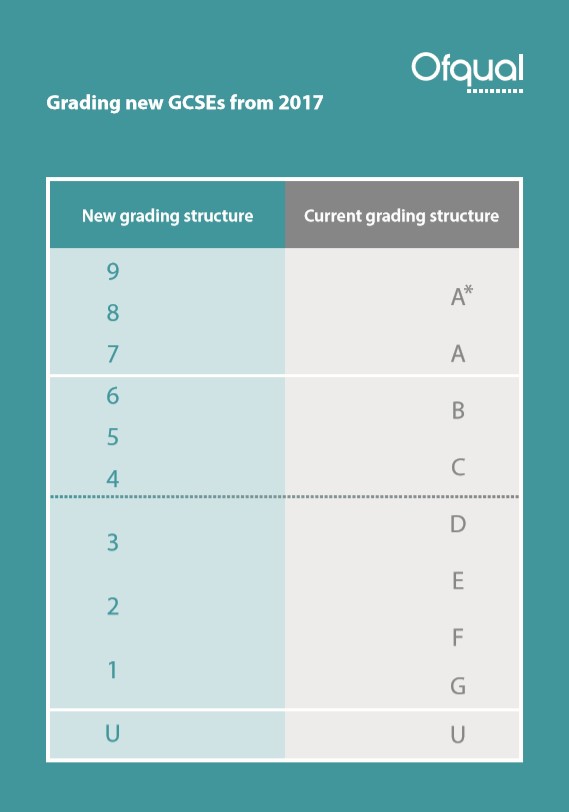
From 2018, learners taken GCSE exams for the first time in most subjects will have their GCSE results recorded using grades 9 to 1
For most languages, and for resits in all subjects, the existing GCSE structure will operate and the results will be recorded as A* to G
The differences between the old and new grading systems are not in themselves a reason to exclude languages from being taken until the reformed exam is introduced. Both are still GCSEs and will appear on students’ certificates. Further information is available on the Gov.uk website.
This has been confirmed by AQA as well as by Ofqual. If your pupils are finding it difficult to be entered for Arabic, Bengali, Chinese, Modern Greek, Gujarati, Italian, Modern Hebrew, Japanese, Panjabi, Persian, Polish, Portuguese, Russian, Turkish, Urdu there are a number of things you should do, immediately:
- Use the attached template letter to write to the mainstream schools your pupils attend (you will need to fill in relevant information about your language) which has been kindly provided by the Polish Educational Society.
- Contact the exam board to find out where they can take the exam.
- Let us know (by logging in and leaving a comment below or by emailing me Pascale), NRCSE has been developing contacts with schools that will accept external entrants, we are also campaigning for more consistent information to be sent out to all language departments and for schools to understand the importance of facilitating access to language exams.
Changes to GCSEs
For GCSE subjects taught in mainstream schools the new specifications are already being taught and children will be taking the new exams in the Summer term 2018 (or in the case of English and maths already took the reformed exams this year).
For ‘community’ languages ie. many of the languages taught in supplementary schools, the new specifications were issued for teaching from September 2017 by AQA and are still in draft for Pearson Edexcel, due to be taught from September 2018. Exams will be available to take in 2019 or 2020 depending on language.
Take a look at the draft specification for your language on the exam board website.
Have you had training on the new specification? Are you sure that your pupils will be able to take the current/old specification exam in 2018? Have you spoken to the mainstream schools where your pupils sit their language exams? Let us know and we will get more information for you and, if necessary, co-ordinate a campaign to ensure that pupils are able to take ‘community’ language exams in 2018 and 2019.
These changes will apply to all awarding organisations’ specifications:
- The new 9-1 grading system will replace A*-G, and there will no longer be any controlled assessment. All papers will be set and marked by the awarding organisation.
- Papers will be tiered, with 25% assessment weightings per skill (listening, speaking, reading, writing).
- Compulsory topics will be linked to identity and culture; local, national, international and global areas of interest; and current and future study and employment.
- Papers will include:
- short translations from and into the target language
- some target-language questions in the reading and listening papers
- authentic stimuli in the reading paper, including literary texts.
For AQA the following languages will be available for GCSE examination from 2019:
Bengali, Chinese (Mandarin), Italian, Modern Hebrew, Panjabi, Polish, Urdu
For Pearson Edexcel the following languages will be available for GCSE examination in 2019
Arabic, Greek, Italian, Japanese, Portuguese, Russian, Urdu
And the remaining five from 2020:
Gujarati, Turkish, Biblical Hebrew and Persian
For A levels check with the examination boards directly.
If you teach a language offered by AQA then you should contact the person you generally speak to, these languages have been with AQA for several years. If you used to speak to someone at OCR, contact Alistair in the first instance for all languages with Pearson because he is very helpful – see below.
Latest stats for ‘lesser-taught’ languages
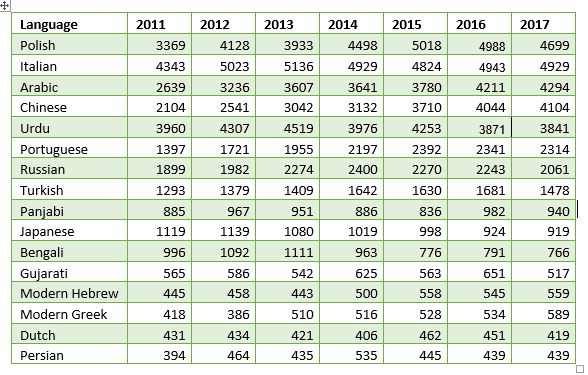
The wonderful Teresa Tinsley, who writes Language Trends each year and is a champion for language learning, has prepared this chart for us.
Showing entries for GCSE and A level examinations in all 16 languages that currently have GB exams available, the chart also shows trends in the numbers entering those exams since 2011.
You will remember that we all had to campaign very hard in 2016 to retain the range of languages with an GB exam available. Working together we were successful in convincing Pearson Edexcel to take over exams that were due to be shelved.
But the hard work has only just begun.
The new exams are being developed now, they will be available for teaching next year and for examination the year after. We need to ensure that teachers are properly trained to teach the new syllabus, we need to ensure children can be presented for those exams in their mainstream schools or join together in language communities to offer centralised examination centres in the way the Tamil community has done. And you need to convince your pupils and their parents to continue their language education so that they can take the exams.
Here are the GCSE entries, you can check A levels on Teresa’s blog
Cognitive benefits of language learning
Complete the questionnaire to make sure your language(s) are recognised and valued!
The British Academy has commissioned a research team to provide an up-to-date systematic review of research into the cognitive benefits of language learning, analyse its implications for policy and practice, and identify potential interventions and gaps in our knowledge.
This special research project is part of the British Academy’s initiative to deepen awareness and demonstrate the importance of languages.
Supplementary/Complementary Schools are represented on the advisory group for this research by NRCSE Executive Director, Pascale Vassie. We are determined to ensure that all languages are considered and the additional demands and benefits when learning a different script are analysed.
To ensure YOUR languages are valued and recognised – please complete this short survey on where and how you learned language(s). It should take no more than 15 minutes.
There is a questionnaire for children too so please get all your pupils to complete this one – Children’s Questionnaire
Note: you should complete this survey no matter when you last learned a language. When you were a child, more recently? How many languages do you speak? How and when did you learn them. From your parents? At school? When you went to a different country for family or work related reasons. Did you arrive in Britain as an adult and have to learn English from scratch? or did you already have a reasonable or good level of English before you arrived?
This will inform the British Academy/University College London research into the Cognitive Benefits of Language Learning – which will in turn help to persuade government and business to provide money to recognise and increase language skills in GB.
If you are raising a trilingual child take a look at this great website that provides links to children’s radio stations
http://www.trilingualchildren.com/p/kids-radio-stations.html