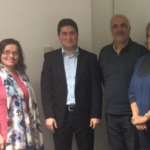
Devasted that Luljeta Nuzi has died after a long fight with cancer. An incredible, dynamic, fierce woman whose optimism and passion for equality for all, in education, as women, as members of refugee and global majority communities will remain an inspiration for those who met her. I first met Luljeta in 2009 when she came […]

National Restrictions from 5 November – Information for Out of School Activities
The purpose for the national restrictions from 5 November 2020 is to reduce the spread of the virus. The main message is to stay at home, except for specific purposes. One of the specific purposes is for education and childcare. With regards to out-of-school settings in particular, please read the following Department for Education advice and new guidance:
Out-of-school activities (including wraparound care) may continue to operate if their primary purpose is providing registered childcare, or where they are offering other childcare activities, where this is reasonably necessary to enable parents to:
- Work or search for work
- Undertake training or education
Out-of-school activities may continue to operate for the purposes of respite care, including for vulnerable children.
Out-of-school activities that are primarily used by home educating parents as part of their arrangements for their child to receive a suitable full-time education (which could include, for example, tuition centres, supplementary schools, or private tutors) may also continue to operate.
Youth support services, including 1-1 youth work and support groups, may also continue to operate.
These settings should continue to undertake risk assessments and implement the system of controls set out in the protective measures for holiday clubs and after-school clubs and other out-of-school clubs for children during the coronavirus (COVID-19) outbreak guidance. Providers of youth services and activities should also refer to the National Youth Agency’s guidance for managing youth sector spaces and activities during COVID-19, where it is relevant to do so.
All other out of school activities, not being primarily used by parents for these purposes, should close for face-to-face provision but can offer remote education, for the duration of the national restrictions. (look at our guidance for ensuring that remote and online provision is run safely and effectively)
It is also important to note that some premises which settings would typically operate out of may only be able to open for certain limited purposes. You should check the latest guidance on new national restrictions from 5 November to see which businesses and venues can open and for which purposes.
Relevant guidance can be found here: https://www.gov.uk/guidance/education-and-childcare-settings-new-national-restrictions-from-5-november-2020
Open access to our 3-day Good Management course
The purpose of this popular three-day Good Management course is to help community providers of supplementary education meet the minimum requirements for safe out-of-school provision.
It remains our firm mission to get local authorities to book the 3-day Good Management for Supplementary Schools course directly and offer it to supplementary schools under their remit. We have had an excellent response from Brent, Harrow, Ealing, Hammersmith & Fulham, Kensington & Chelsea, Sheffield and Suffolk since launching the 3-day course and we’re keen to deliver in other authorities. Please take a look at the course content and get in touch to discuss further.
It is also, however, our mission to support community-led supplementary schools where the authorities are not able to support you. For this reason in January 2018, we are offering our popular 3-day Good Management course directly to individual learners. Whether you are planning to open a supplementary school, you have just joined the management committee of your child’s supplementary school or you have been running out of school activities for many years and you need to check that you are doing everything in line with current policy and good practice – our 3-day Good Management course will help you.
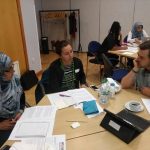


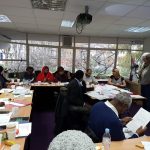
You can meet all your New Year’s resolutions at once by attending our course in January!
Over the three days we shall prepare a three booklets that you can use with parents, teachers and volunteers, and the management committee. Together the three booklets will guide you to put together a Management File for your supplementary school.
The Good Management Pack consists of
- A Welcome Pack for Parents
- Staff and Volunteer Handbook
- Management Committee Guide
To complete the minimum requirements for safe out-of-school provision you must have all of the policies and procedures detailed in the Good Management Pack. Each day we shall complete one of the three focused booklets: Day 1 -Welcome Pack for Parents; Day 2 – Staff and Volunteer Handbook, Day 3 – Management Committee Guide.
The fee for the full course is £450 or £150 per day. If you book all three days together you can send two people for the price of one, an excellent opportunity to train up a prospective trustee or a staff member.
If you subscribe to NRCSE you access discounted prices on all our products. For this course the full price is £225 or £75 per day. You are also eligible for the same two for one discount as above.
Just go to the training section in our online shop to book your place(s). To get the maximum benefit from this course your school should send at least one person to all three sessions. Even better, if you book all three days together you can send two people each day for the same price!
Two research studies published
Two leading think-tanks, IPPR and RSA, publish reports on supplementary schools
From Institute for Public Policy Research
Satu
rdays for success: How supplementary education can support pupils from all backgrounds to flourish
Mainstream schools can benefit in a number of ways from the work of the UK’s many community-led educational programmes. This report makes recommendations for how more pupils, schools and communities can gain from the rich, extracurricular learning environments that these ‘supplementary schools’ offer.The more diverse Britain becomes, the more scope there is for mainstream schools to take advantage of, and benefit from, the extensive network of between 3,000 and 5,000 supplementary schools that exists in the country. These community-led out-of-school educational programmes, set up largely by migrant and ethnic minority communities, have widespread support from parents and communities, and offer a personalised and informal learning environment that complements mainstream education, covering areas including the core curriculum, languages, and cultural activities.
At their best, these supplementary schools offer children and young adults a rich learning experience, providing personalised learning with strong pupil–teacher engagement, and giving young people the means to explore complex questions of identity, engage with role models from similar backgrounds, and develop networks of peer support.
In this report we recommend greater complementarity and coordination between the mainstream education system and these thriving supplementary schools. This would make some mainstream schools better prepared and equipped to deal with the pressures that come with catering for a diverse student body, and further the government’s commitments to community- and parent-led approaches to education, and to greater diversity and autonomy within the schools system.
We call for more mainstream schools to, through engagement with supplementary schools, become active players in their communities. In doing so, they can raise the capacity of those communities, and of parents, to take ownership over their children’s education. They can help ensure that out-of-school learning and enrichment opportunities are high-quality, and open and accessible to all pupils, particularly those who need them the most.
 This report sets out a roadmap for how mainstream schools can build on and engage with supplementary education, where there is a high-quality local offer. We suggest three modes of engagement with supplementary schools:
- mapping supplementary school uptake
- greater coordination with, and referral to, supplementary schools
- cooperative programming with supplementary schools.
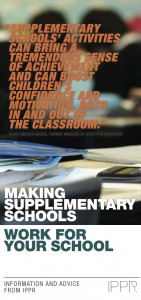
Making supplementary schools work for your school
IPPR has also produced a summary of the research presented in this report, tailored specifically for headteachers and other education professionals in primary and secondary schools.
Entitled ‘Making supplementary schools work for your school’, it considers the challenges facing mainstream schools, asks how those schools and their pupils can benefit from supplementary schools, and suggests how they can best work together.
You can download it here.
And from the RSA (Royal Society for the encouragement of Arts, Manufactures and Commerce) Beyond the school gates
 As part of the RSA-Investigate-Ed series, Selina Nwulu explores the developing roles and connections of supplementary schools, in light of the changing needs of black and minority ethnic (BME) pupils and the longstanding barriers they face.
In a changing cultural, social and economic climate, we consider how supplementary schools might adapt, particularly to helping their pupils make successful transitions from school to further and higher education and employment. Over the past 20 years, BME students have made advances within the education system. Chinese and Indian students remain consistently high achievers and Bangladeshi and Nigerian students now outperforming their white British peers at GCSE. Black Caribbean pupils have made some academic advances, but they still attain below the national average. BME students are also far more likely to go to university than they were 20 years ago.
However, beyond compulsory education, the obstacles continue; BME students are less likely to be offered a place at a Russell Group university than their white peers with similar grades. Black, Pakistani and Bangladeshi groups twice as likely to be unemployed as their white peers. By extension, people from BME backgrounds are more likely to work in temporary or precarious employment which has been linked to lower wellbeing.
While supplementary schools cannot and should not address these complex issues alone, how might supplementary schools form a more integral part of the local learning ecology, connecting with mainstream schools, higher and further education institutions and arts and cultural bodies to offer a strengthened network of support to BME young people?
Our report aims to widen the conversation about supplementary schools and their existing roles, so that they are able to evolve with support and intention, This report’s recommendations, therefore, centre on how supplementary schools can harness their strengths to broaden their purpose, connection, impact and sustainability.