Devasted that Luljeta Nuzi has died after a long fight with cancer. An incredible, dynamic, fierce woman whose optimism and passion for equality for all, in education, as women, as members of refugee and global majority communities will remain an inspiration for those who met her. I first met Luljeta in 2009 when she came […]
The Languages Gateway
We are excited to introduce supplementary schools to “The Languages Gateway,” the UK’s innovative portal dedicated to languages. This collaborative initiative is designed to serve as a comprehensive gateway, connecting individuals and organisations involved in the field. The Languages Gateway provides a wealth of opportunities, resources, and information concerning languages and their crucial role in understanding and appreciating diverse cultures and societies.
The Languages Gateway is a joint effort brought to you by a consortium of leading organisations in the fields of languages, skills, and education. The need for this invaluable portal was identified through the collaborative efforts of ‘Towards a National Languages Strategy‘, which was produced by five organisations:
- The British Academy
- The Arts and Humanities Research Council (AHRC)
- The Association of School and College Leaders (ASCL)
- The British Council
- Universities UK
Initial funding for The Languages Gateway’s first phase of development has been generously provided by the British Academy. It is currently under further development in close consultation with lead organisations, which include the five and:
- The Association for Language Learning (ALL)
- The Association of University Language Communities in the UK and Ireland (AULC)
- The Chartered Institute of Linguists (CIOL)
- Education Scotland
- The Institute of Languages, Cultures and Societies (ILCS)
- The National Association of Language Advisers (NALA)
- The Northern Ireland Centre for Information on Language Teaching and Research (NICILT)
- YPF Trust | centre for supplementary education (formerly NRCSE)
- Routes Into Languages Cymru
- Scotland’s National Centre for Languages (SCILT)
- The University Council for Languages (UCFL)
If you are actively involved in languages or simply interested in learning more, we strongly encourage you to engage with their website and ensure your valuable content is represented. For further information, please refer to the attached briefing note.
Website: The Languages Gateway
Thank you for your attention, we look forward to seeing your involvement in this exciting venture.
Information session: Updated Out-of-School Settings Code of Practice and Guidance
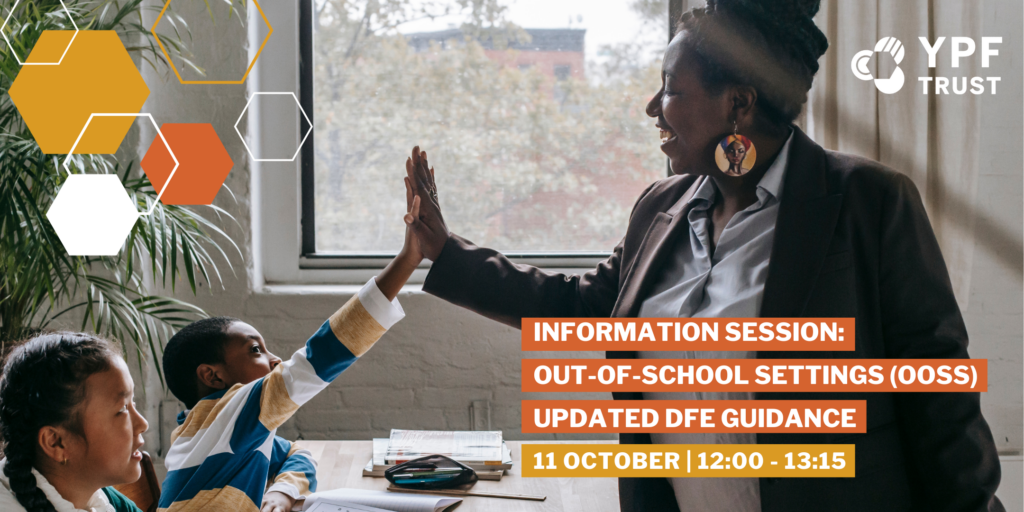
Wednesday 11 October, 12:00 – 13:15
The YPF Trust, in collaboration with the YPF Network and the Department for Education (DfE), is delighted to host an information session regarding the updated Out-of-School Settings (OOSS) Code of Practice and Guidance for Parents, which was recently published on 19th September 2023.
This session provides a platform to hear directly from DfE representatives about the revised OOSS Code of Practice and to clarify any questions. The agenda includes a presentation from DfE, followed by a Q&A session.
The OOSS Code of Practice is a non-statutory guidance tailored for organisations or individuals offering community activities, tuition, or after-school clubs for children, also known as out-of-school settings (OOSS). This crucial guidance aims to assist providers in operating safe settings to ensure the welfare of the children under their care. It captures best practices on:
• Safeguarding and Child Protection
• Staff and Volunteer Suitability
• Health and Safety
• Governance
Safeguarding, and promoting the welfare of children, is everyone’s responsibility. The guidance has been created with reference to policies and guidelines in England.
It covers best practices and makes clear legal requirements. There is an expectation that all providers review, and comply with, what the law says they must do; see the legal requirements subheading at the end of each section.
For the full guidance, please refer to:
Join us for this important session to ensure the safety and well-being of children in out-of-school settings.
Creative Teaching and Learning Project INSET day Training
As part of the Supplementary Schools Programme funded by JLC, the Creative Teaching and Learning Project (CTL) focuses on the role of arts and cultural learning in transforming young people’s lives. Based on feedback and need, we provide capacity development programs for supplementary school teachers. These programs aim to support teachers in adopting more creative approaches to create inclusive and participatory learning environments, as well as child-friendly and fun lesson plans.
Within this project, we directly engage with teaching staff by providing INSET day training at the supplementary schools, ensuring that all teachers within one setting receive the same training to collaborate effectively as a team. Following the initial training, we offered follow-up sessions, partnering two supplementary schools to introduce the culture of collaborative learning and partnership within supplementary education, allowing teachers from different cultural backgrounds to work together and learn from each other. I believe the benefits of this programme for supplementary education are substantial, as reflected in the positive feedback we receive from head teachers and teachers who attend the training.
Check out our video which summarises the programme
NEW guidance on Keeping Children Safe in Out-Of-School-Settings
The Government have updated their guidance on Keeping Children Safe in Out-Of-School-Settings.
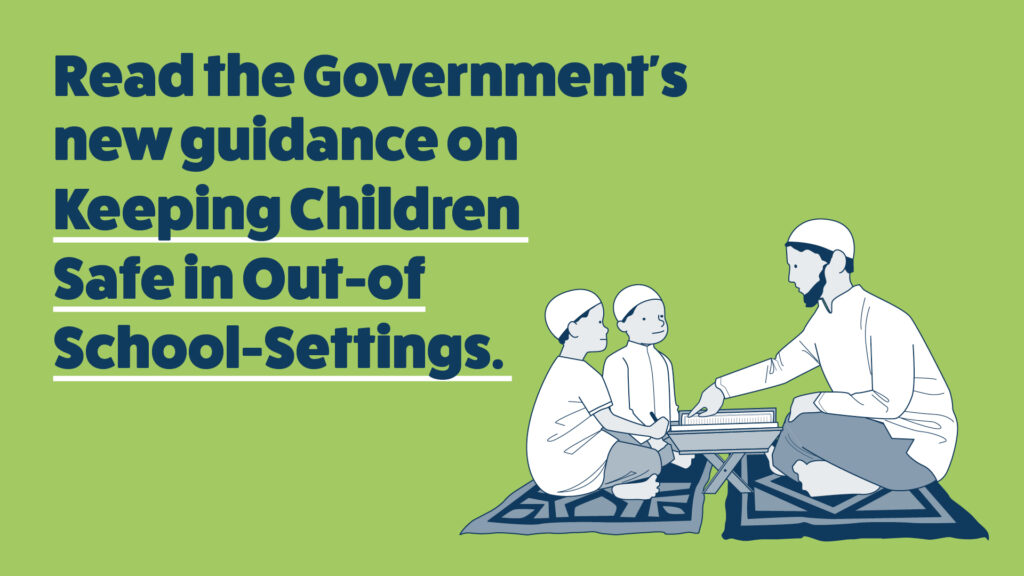
This guidance covers advice on what policies and procedures providers should have in place for:
- health and safety
- safeguarding and child protection
- staff suitability
- governance
It covers out-of-school settings such as:
- community activities – for example, youth clubs
- before- and after-school clubs
- holiday clubs
- supplementary schools – for example, language, cultural and religious
- private tuition
- music lessons
- sports training
All children have the right to attend fun, safe activities; and whether you are a volunteer or a setting leader you have an important role to play in this.
Keep children in your setting safe by following the simple steps outlined in the updated Keeping Children Safe in Out-of-school Settings guidance.
Remember that everyone in the setting needs to work together to keep children safe, so make sure your policies and procedures are user-friendly and available to all staff and volunteers.
Download: