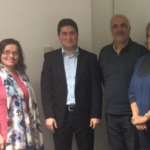
Devasted that Luljeta Nuzi has died after a long fight with cancer. An incredible, dynamic, fierce woman whose optimism and passion for equality for all, in education, as women, as members of refugee and global majority communities will remain an inspiration for those who met her. I first met Luljeta in 2009 when she came […]
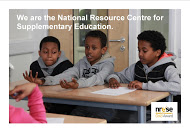
NEW! NRCSE Good Management E-learning Programme
NRCSE is pleased to announce the launch of our new e-learning programme based on our acclaimed Good Management Course!
The course was developed in collaboration with The National Training Academy and funded by the John Lyon’s Charity. It is the latest addition to the outstanding support package available for NRCSE subscribers.
- seven self-led e-learning modules
- complete at your own pace
- helps you prepare good management policies and procedures
- based on tried and tested content
- In line with the Department for Education non-statutory guidance on keeping children safe in out-of-school activities
- first step towards the nationally recognised NRCSE Quality Mark
- FREE for NRCSE subscribers
Watch our promo video to learn more! Subscribe to be the first to access the programme!
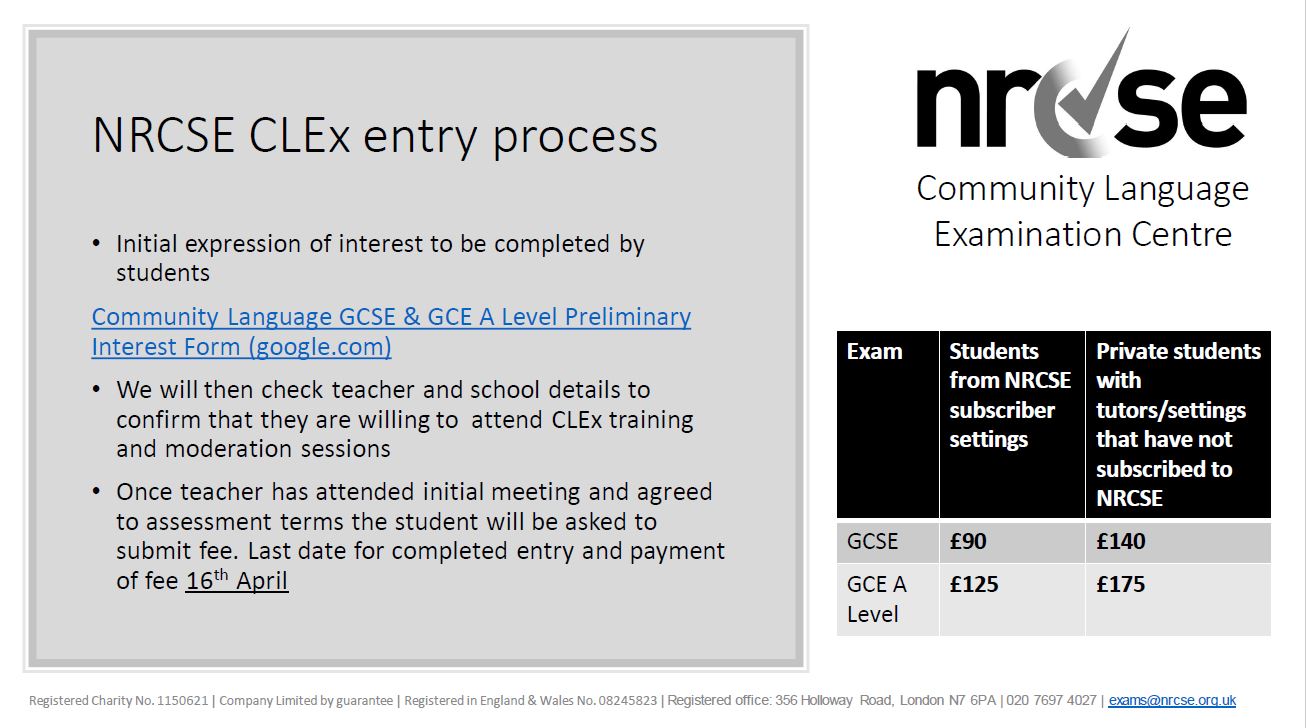
New Community Language Examination Centre open for entries
CLEx (NRCSE Community Language Examination Centre) is open to entries from students attending any of our subscribing supplementary schools who are trying to find an examination centre for the following languages:
German, French, Spanish, Arabic, Biblical Hebrew, Chinese, Greek, Gujarati, Italian, Japanese, Persian, Portuguese, Russian, Turkish and Urdu.
For any information about CLEx please email us, or complete our preliminary registration form and we will get in touch. The closing date for completing your registration with us is is 16/4/21.
We believe strongly that the best place for young people to enter a home/heritage language GCSE is through their mainstream schools if at all possible. There are also community-led supplementary schools that are also registered examination centres for their own students and affiliated settings. For Gujarati we recommend you check whether you can enter through BAPS Swaminarayan. For Persian we recommend Rustam. For Russian we recommend Znaniye. For Polish we recommend the Polish Educational Society. For Greek we recommend getting touch with the Cyprus Educational Mission.
Covid-19 Safe Re-opening Webinar – 24th March
If you missed the last one, you can now sign up for our second Covid-19 Safe Re-opening webinar on 24th March!
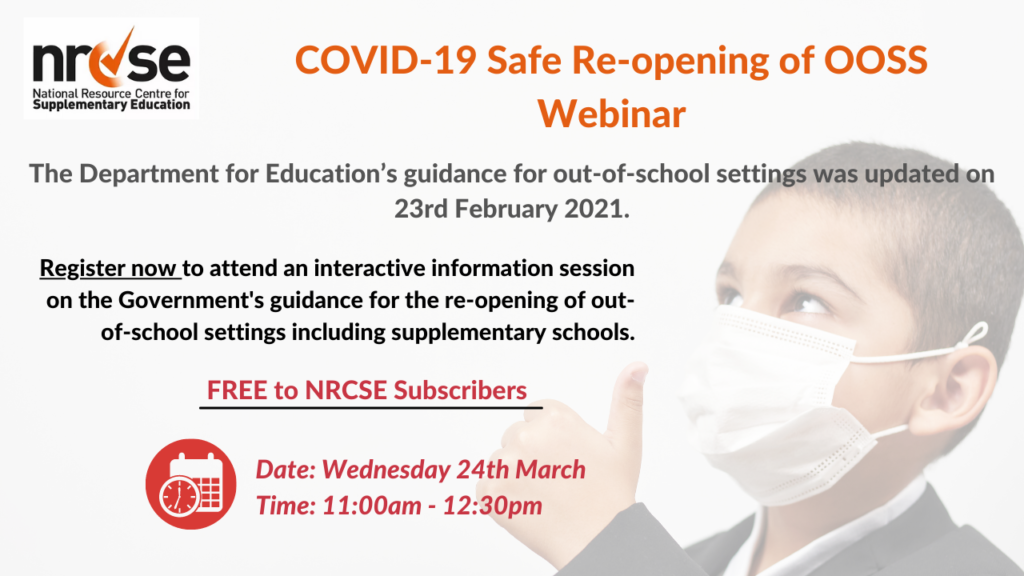
The Department for Education’s guidance for out-of-school settings who provide activities for children, was updated on 23 February 2021.
To help you prepare for safe re-opening of your supplementary education and other out-of-school activities, NRCSE is running interactive webinars on the updated guidance with opportunity to break into smaller groups to complete risk assessment for your provision.
This webinar is FREE TO NRCSE SUBSCRIBERS! To subscribe please click here.
We offer regular updates and guidance sessions online free-of-charge to our subscribers. Subscription is £50 however, if you do not wish to subscribe, you are welcome to attend our sessions for a small fee of £25. Please share with anyone who might find this webinar useful.
Register: Covid-19 Safe re-opening of out-of-school settings Tickets, Wed 24 Mar 2021 at 11:00 | Eventbrite
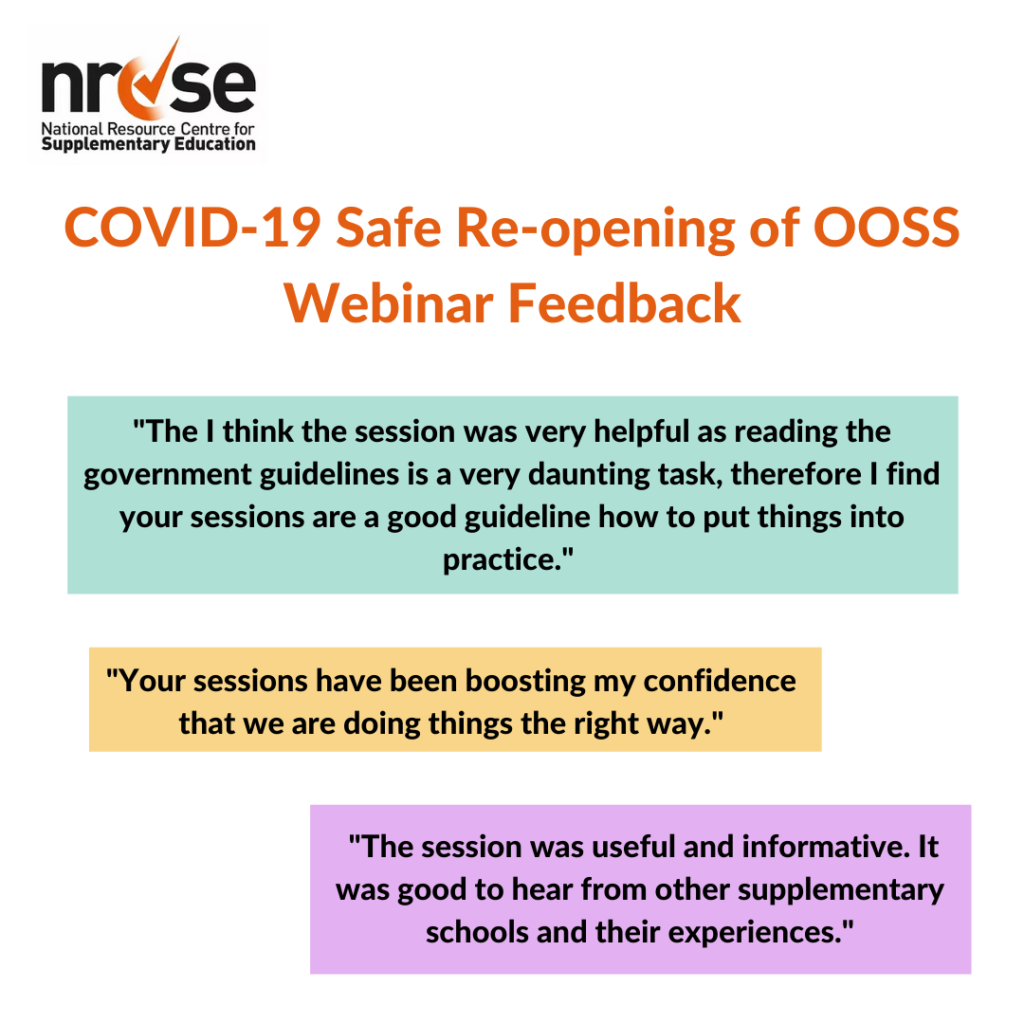
Feedback from our last Covid-19 Safe Re-opening webinar:
Quality Mark for Supplementary Education
Since 2009, the National Resource Centre for Supplementary Education has supported 504 supplementary schools to develop the quality of their provision through training, facilitation and moderation of nationally recognised and respected quality assurance for the supplementary education sector that:
- raises awareness,
- improves quality, and
- facilitates partnership
To achieve a Quality Mark, supplementary schools must demonstrate that they:
1. Create an effective learning environment
2. Teach effectively
3. Record progress and achievement
4. Choose the right resources
5. Plan and develop your organisation
6. Select and support staff and volunteers
7. Make sure that children are safe
8. Manage finances wisely
There are three routes to ensure good practice is being met and to access the NRCSE Quality Mark.
1. Supplementary schools are supported by a trained mentor or local authority representative who checks that they are meeting local and national safeguarding standards and completes the NRCSE management checklist report.
2. Groups of supplementary schools take the NRCSE 3-day Good Management course and are each supported to complete a management folder. The NRCSE management checklist report is completed by an NRCSE Quality Development Adviser (generally the course trainer)
3. An individual supplementary school completes online assessment of their provision and upload copies of policies and procedures. An NRCSE Quality Development Advisor checks through their documents and gives feedback via the NRCSE management checklist report.
Once safeguarding standards are met the school downloads templates and guidance from the NRCSE website and prepares a portfolio of evidence. The school must arrange an observation visit from an appropriate person (qualified teacher/education professional/NRCSE-trained mentor) who will write a short report witnessing what they have observed. The school then confirms that they are ready for their provision to be quality assured by NRCSE.
NRCSE will discuss with the school and local authority to identify a local ‘educational expert’ and arrange for a ‘Quality Recognition Meeting’ to take place.
At the Quality Recognition Meeting, two experts (one from a mainstream educational background and one from NRCSE) will scrutinise the portfolio of evidence, listen to a short presentation from school representatives, ask questions, and come to a decision as to the level at which the eight standards have been achieved.
A Quality Mark report is prepared, together with a certificate and a logo and sent to the school.
With the school’s permission, this report is included on NRCSE’s online directory of quality supplementary education providers.
Local authorities are encouraged to publicise the achievement of supplementary schools in their area, demonstrating their own good practice and supportive response to government regulation and statutory guidance.
NRCSE arranges a national celebration of achievement annually. Past celebrations have taken place at the British Museum and the Houses of Parliament.